Why Professional Drain Cleaning Beats Chemical Cleaners Every Time?
June 30, 2026
You poured the whole bottle in, waited the fifteen minutes the label promised, and ran the water. The sink gurgled, drained halfway, then settled back into the same ring of gray standing water. Now the basin smells of chemicals and you are no closer to a working drain than an hour ago.
What almost nobody tells you in that moment is that most chemical cleaners do not remove a clog at all. At best they burn a narrow channel through the soft center and leave the rest packed against your pipe walls, which is why the slow drain returns within days. After clearing tens of thousands of lines over three decades, we can tell the difference between a drain that is open and one that is actually clean, and a bottle almost never gets you the second. The real fix is mechanical. You have to physically remove what is stuck, not melt a tunnel through it and hope the rest washes away.
Why That Bottle of Drain Cleaner Let You Down
Chemical cleaners fail because they react with the wrong thing. Most rely on a caustic base or an acid that gives off heat as it breaks down hair, grease, and soap, climbing past 140 degrees inside the trap, hitting only what it touches first. When water sits on a clog, the cleaner eats a small hole in the top, the rest stays put, and the clog rebuilds against the same narrowed pipe within a week or two.
The bigger issue is what the cleaner never reaches: grease hardened along a line, roots threading through a joint, or a sagging section holding water. None of that yields to a pour down chemical. Around Arlington, where mature trees and older drain lines are common, the cause is usually structural.
The Damage You Cannot See Inside Your Pipes
The heat that makes a cleaner feel like it is working is the same heat that shortens the life of your plumbing. Modern drain lines are PVC or ABS plastic, and a strong caustic reaction in a trap can soften and warp the fittings over repeated use. On older homes we still see cast iron and galvanized steel, and repeated exposure speeds up the corrosion already eating those pipes from the inside.
Rubber gaskets, seals, and the slip joints under your sink take the worst of it. We have pulled apart traps where the washers turned brittle and crumbled from cleaner that sat for hours. On a septic system, common outside the Arlington city limits, that same chemical kills the bacteria your tank depends on. The bottle does not just fail. It trades a
clogged drain today for a leaking joint or a failing tank later.
WARNING: Never pour a second chemical into a drain that already holds standing cleaner, and never mix two products. An acid combined with a bleach based cleaner can release toxic gas in seconds, and a caustic solution can splash and burn skin or eyes when you open the trap. If a chemical is sitting in the line and not draining, stop and call us first.
What Actually Clears a Drain for Good
Clearing a drain for good starts with seeing the problem, not guessing. We run a waterproof camera down the line first, because a slow kitchen sink and a backing up main line look identical from the surface but need different fixes. Then we match the tool to the clog.
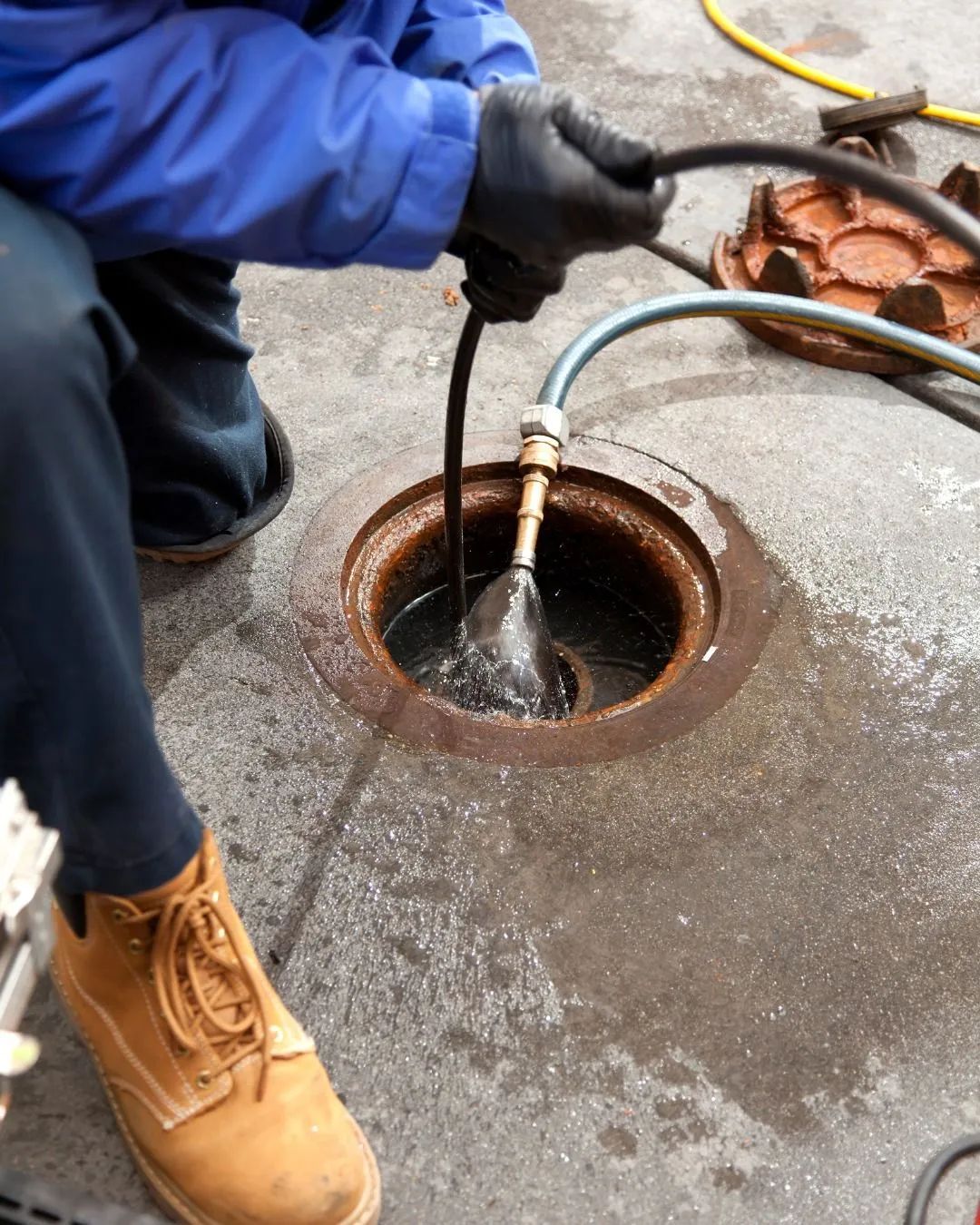
For most stoppages we use a motorized auger, also called a cable or snake, that reaches 75 to 100 feet and pulls back hair, roots, and packed debris. For grease, scale, and heavy buildup coating the full pipe, we use hydro jetting, which drives water through a nozzle at 1,500 to 4,000 psi and scours the entire diameter back to bare wall. That is what a chemical can never do. It cleans the whole pipe, not a tunnel through the center, so the line drains like new and stays clear longer.
TIP: Before you call anyone, run hot water and notice whether one fixture is slow or several back up at once. A single slow sink usually means a local clog near that trap. Two or more gurgling together points toward the main line.
Why Arlington Drains Clog Differently
Drains here clog differently because of trees, soil, and wet winters working against your pipes year round. The cedars, firs, and big leaf maples that fill Snohomish County send roots searching for water, and a sewer line carrying warm waste is the easiest target they find. In homes built before the 1980s, clay and cast iron laterals with their many joints give roots a way in, and one hairline gap can fill with a root mass thick enough to stop the line.
Our saturated ground makes it worse. Months of steady rain keep the soil heavy and shifting, which stresses older pipe and opens the separations roots exploit. Cold snaps finish the job: grease that flows fine in summer congeals fast against a cold winter pipe, especially after holiday cooking, and hardens into a blockage no chemical touches.
When Chemicals Seem to Work but Do Not
The hardest cases we see are the ones where a chemical seemed to work for a while. The drain opened, you moved on, and three weeks later it slowed again, only worse. The pinhole channel let just enough water through to fool you while the real clog kept growing. By the time it backs up for good, the fix is bigger than at the first sign of trouble.
A few honest patterns: repeat pours on the same drain almost always mean a root or grease problem that needs a cable or a jet. A drain that clears for a day and returns points to a partial blockage downstream. A main line backing up into a tub or floor drain is never a chemical job, and the longer it waits the more likely it floods a floor.
Keeping Your Drains Clear
Keeping drains clear is mostly about habit. Every month, fill each sink and tub, then pull the stopper so a full rush of water flushes the line rather than the trickle that lets debris settle. Keep grease, coffee grounds, and food scraps out of the kitchen drain, and clear the strainers weekly.
Once a year, if you have mature trees or an older home, having us run a camera through the main line catches a root intrusion while it is small, before it floods anything or a season of chemical pours leaves you with a damaged line.
Frequently Asked Questions
Do professional drain cleaners take longer than a chemical pour?
A typical sink or shower clog clears in under an hour once we arrive at your home. Main line work that needs a camera inspection and hydro jetting may run two to three hours start to finish. Either way, the drain is fully open and flowing the same day, not left partially open to back up again within a week.
Are chemical drain cleaners safe to use at home?
We recommend against them in nearly every situation. The caustic and acid formulas burn skin and eyes on contact, release fumes that irritate your lungs, and turn dangerous the moment they mix with another cleaner. Beyond that personal risk, they corrode your pipes, seals, and gaskets from the inside, so mechanical clearing remains the safer and smarter choice every time.
Why do tree roots cause so many clogs in Arlington homes?
Our wet climate and the mature cedars, firs, and big leaf maples around town drive roots steadily toward the warm, nutrient rich water inside your sewer line. Older clay and cast iron laterals with their many joints give those roots an opening, and a single hairline gap can fill with a root mass thick enough to stop the line entirely.
Can I clear a drain myself with a hand snake?
Often yes, for a simple clog sitting near a sink, tub, or shower trap. A short hand auger reaches that first bend safely and pulls back hair and soap with little risk. Stop, though, if you feel a hard wall of resistance or reach the main line, since forcing it there can crack older pipe and worsen the whole problem.
How often should drains be cleaned to prevent backups?
For most homes, a yearly camera check of the main line is plenty, and sooner if you have large trees nearby or an older property with aging pipe. Kitchen lines that see heavy daily use benefit from a thorough professional cleaning every couple of years, before grease and buildup harden into a full blockage that backs up into your sink.
Trusted Arlington Drain Cleaning Done the Right Way
A drain is either truly clean or merely punched open, and a chemical cleaner can only ever give you the second one while quietly damaging the pipe it sits in. That gap matters more here than almost anywhere, because Arlington roots, saturated soil, and cold winter grease build the exact clogs no chemical can dissolve. When your drain keeps coming back or backs up at the main, skip the bottle and call us at Glacier Peak Plumbing. With 30
years clearing lines across Arlington, Washington, we will find the real cause, clear it the right way, and show you on camera that it is gone.